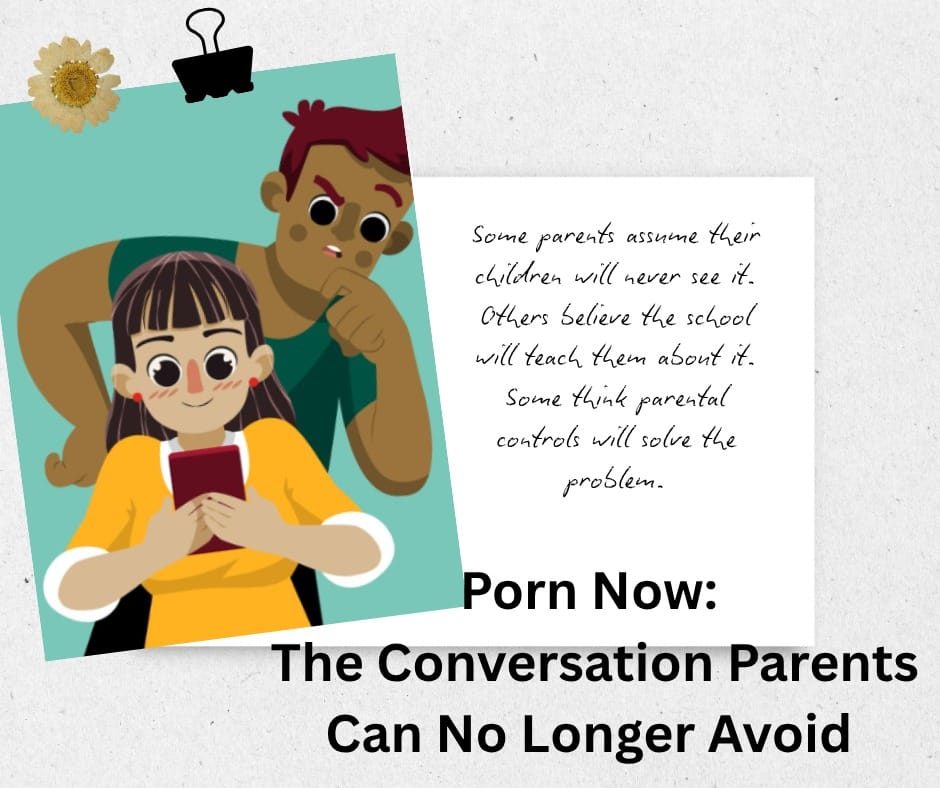
There is a conversation many parents desperately want to avoid.
Pornography.
Some parents assume their children will never see it. Others believe the school will teach them about it. Some think parental controls will solve the problem.
But in 2026, children can encounter sexual content through social media, messaging platforms, websites, advertisements, search results, online communities, gaming chats and content that was not deliberately searched for.
That means parents need to talk about pornography before the internet has the conversation for them.
My Child Would Never Search For That Maybe. But children do not always find inappropriate content because they deliberately search for it.
They can encounter it accidentally. A friend can send it. An inappropriate advertisement can appear. A social media recommendation can lead somewhere unexpected. Someone online can deliberately send sexual content to a child.
This is why silence is not a safety strategy.
The First Reaction Matters Imagine your child comes to you and says, "Mum, I saw something bad on my phone."
What happens next matters.
If the parent immediately screams, "What were you watching?" or starts threatening punishment, the child may learn one lesson: Never tell Mum again.
A better first response is: "Thank you for telling me."
Then ask what happened. Was it accidental? Did someone send it? Did someone ask the child for something? Did the child feel uncomfortable? Is someone threatening them?
The goal is to understand the situation before deciding what to do next.
Pornography Is Not Sex Education Children need accurate, age-appropriate education about bodies, relationships, consent, respect, boundaries and safety. Pornography is not designed to provide that education.
Parents should therefore not leave children to learn about relationships and sexuality entirely from the internet.
Parents Need to Talk About Private Images
Children should understand that nobody has the right to pressure them into sending private photographs. They should also understand that forwarding somebody else's private image is harmful and can have serious consequences.
The conversation should include: "Nobody should pressure you." "You can always tell me." "Do not send private images because someone says they love you." "If someone threatens you, come to me." "Do not forward another person's private images." These conversations are about safety, not shame.
Do Not Make Your Child Afraid of You This is especially important with teenagers.
A teenager who believes that telling the truth will automatically result in their phone being confiscated may hide problems.
Parents need authority, but they also need to remain approachable.
A child should know: "If something frightening happens online, I can tell my parent."
Use Technology, But Do Not Depend Only on Technology
Parental controls, filters, safe-search settings and age restrictions can reduce exposure to inappropriate content. They are useful. But no technical system is perfect.
Parents should therefore combine technology with education, supervision, trust and open communication.
Talk About Pornography Before the Crisis Do not wait until you discover something on your child's phone.
Create opportunities for conversation. You might discuss something you saw in the news, talk about internet safety after watching a programme together or explain why certain websites are age-restricted.
You do not have to give a ten-minute lecture. Sometimes a simple conversation is enough to open the door.
Parents Also Need to Know Their Children's Digital World What apps are they using? What groups are they in? Who can contact them? Are their accounts private? Do they know how to report inappropriate content? Do they know what to do if someone threatens them? Do they know they can come to you?
These questions are more important than simply asking, "Did you do your homework?"
The School Conversation Matters Too Schools cannot carry the entire responsibility for digital parenting. Parents cannot carry it alone either.
Teachers, school administrators, counsellors and parents need to work together to create environments where children can ask difficult questions safely.
When families are choosing schools, they should ask about student welfare, communication, safeguarding and how the school handles digital risks.
Parents can use EnrollQ when researching verified schools and vacancies in Kenya: EnrollQ
The Goal Is Not Fear. It Is Preparation. We cannot completely remove the internet from our children's lives. Nor should we. The internet can educate, connect and create opportunities.
But children need adults who will help them understand what they encounter.
The pornography conversation may feel uncomfortable. Have it anyway.
The difficult conversation you have today may prevent a much bigger problem tomorrow.
Silence does not protect children. Knowledge, trust, boundaries and open communication do.